Why is it so important to check the special conditions when buying a property at auction?
Publish Date: 13 May 2024
By Jade Shrubsole

Further reading
Auctions have become a prominent avenue for the sale of development sites
Why is it so important to check the special conditions when buying a property at auction?
Checking special conditions when buying a property at auction is crucial for several reasons:
Legal Obligations: Special conditions outline legal obligations and terms specific to the property being auctioned. Ignoring these could lead to unintended legal consequences or financial liabilities.
Property Details: Special conditions often contain crucial information about the property, such as any existing liens, encumbrances, or restrictions on its use. Understanding these details helps buyers make informed decisions about the property's suitability for their needs.
Fees: Special conditions may include details about the payment terms, deposit requirements, and any additional fees or charges associated with the purchase. Failing to review these could result in unexpected financial burdens or difficulties in completing the transaction.
Rights and Responsibilities: Special conditions outline the rights and responsibilities of both the buyer and the seller. It's essential to understand these terms to ensure a fair and smooth transaction process and to avoid potential disputes later on.
Property Condition: Special conditions may include information about the property's condition, any known defects, or required repairs. This information helps buyers assess the property's value accurately and decide whether they're willing to take on any necessary renovations or maintenance.
Contingencies: Special conditions may include contingencies that must be met for the sale to proceed, such as obtaining financing or completing inspections. Understanding these contingencies helps buyers plan accordingly and reduces the risk of the sale falling through.
Example Special Conditions:
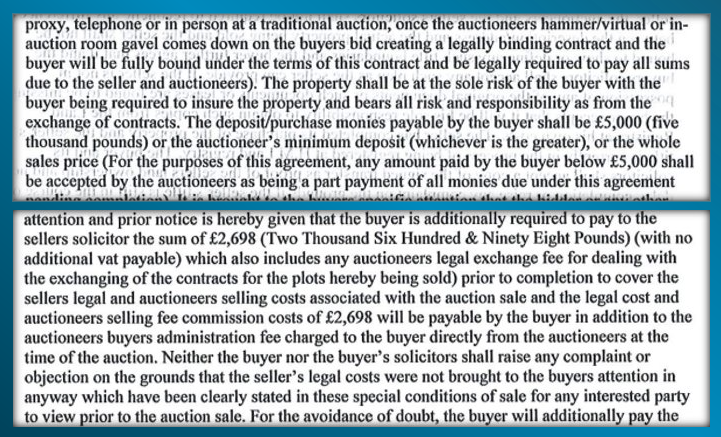
Checking Special Conditions before buying a property at auction is essential for minimising risks, ensuring transparency, and making informed decisions throughout the purchasing process.
Other matters to check:
- Title Plan
- Lease Plan
- Date Vendor Purchased, How Much For?
- Planning Status (TPO's. Greenbelt, Conservation Area)
- Permitted Development Entitlement, How Much Left?
- Rateable Value
- Any Missing Documents?
Essential Information Group - News and Information
Keep up to date with our latest news, case studies and what's going on in the property auction industry on our blog.

Industry news
21/10/2026
Two million recorded bids. Every bid has a story.
A major milestone for Essential Information Group (EIG) as we celebrate our 2 millionth recorded auction bid. This landmark moment reflects the continued growth of property auctions and the importance of accurate, comprehensive auction data in helping property professionals make informed decisions.

Buying at auction
25/03/2026
The Most Important Document in the Legal Pack? The One That’s Missing.
Legal packs are often treated as the definitive source of truth in a property transaction. But in reality, they are anything but complete. While they provide essential information, they are built to meet minimum requirements - not to offer full transparency. And in many cases, it’s not what’s included that creates risk, but what’s missing.

Buying at auction
24/03/2026
Guide Prices: Why Buyers Should Treat Them as a Guide to the Reserve
Guide prices are one of the most misunderstood elements of the auction process. Too often, buyers treat them as an indication of a property’s value, when in reality they are designed to signal something entirely different, the likely reserve. In an increasingly competitive and dynamic auction market, understanding this distinction is critical to making informed decisions and avoiding costly assumptions.